

Spare vinyl specifications
Material, colour reference, cut lines, and artwork details needed for replacement vinyl.
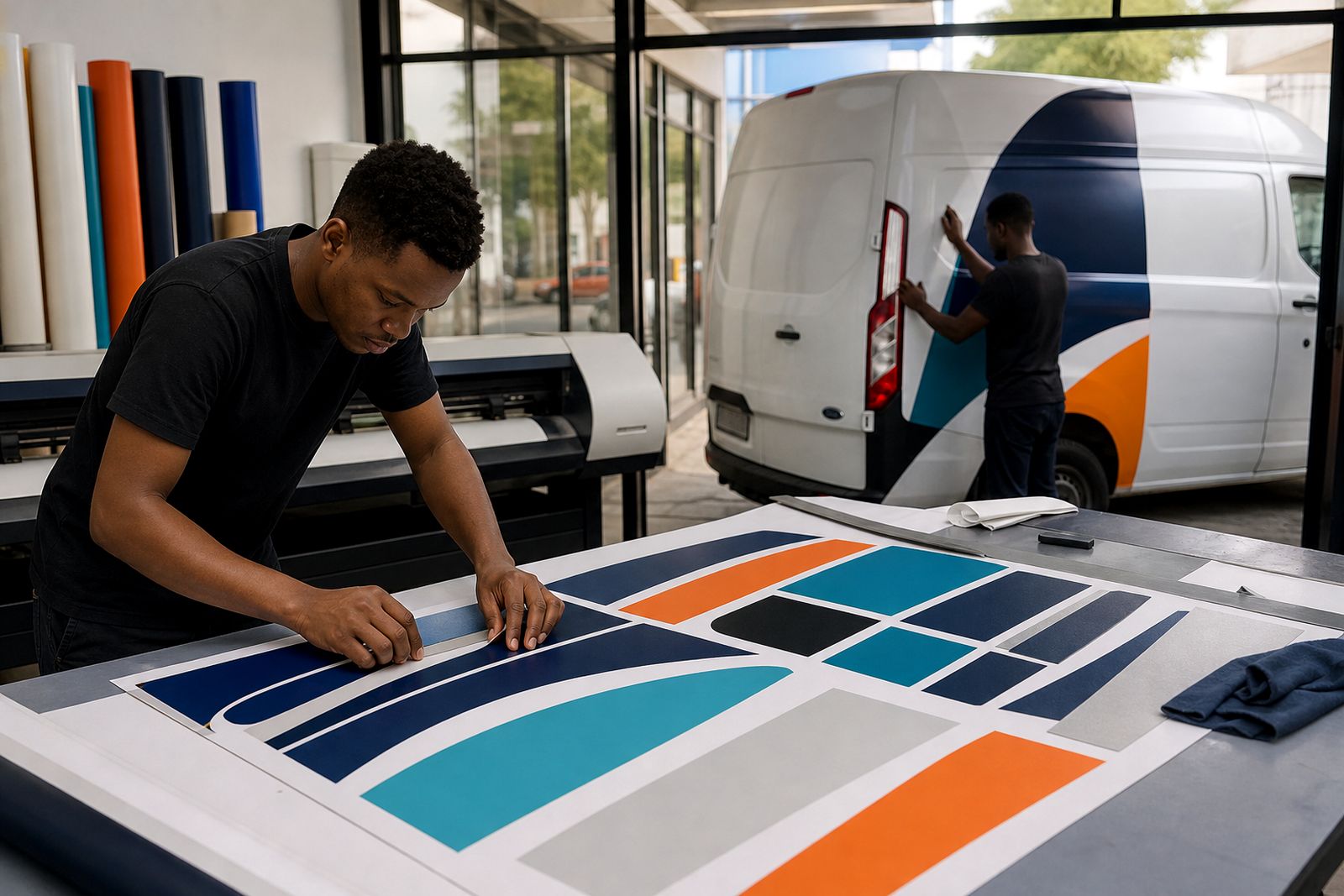
Old vinyl on site
Strips and panels ordered as replacements should match the original job specification for material, colour reference, cut path, and artwork. That match allows each new piece to drop back into the same positions on the client’s windows, display panels, or service counters inside the client’s store.
Many branded interiors carry a mix of surfaces such as glass, ACM panels, painted boards, and service counters inside the client’s store, and each area needs vinyl chosen for that surface rather than only for how the artwork looked on screen. Once the substrate has been identified, the brief should say whether the original film was gloss, matte, translucent, or laminated so the new piece behaves like the rest of the set under light. Exposure, cleaning routines, and whether the piece sits indoors or outdoors all influence adhesive choice and the extent to which the original colours may have shifted over time.
Before any redraw work begins, the request describes the damaged area in writing, including what is damaged, what is still in place and any text that appears there. Notes that explain the surrounding frame or mullions make it clear where the earlier cut line sat on client window panels, till points, and narrow fascia strips. Adding the original job number keeps the colour standard, artwork version, and material notes tied to the correct client set.
Replacement vinyl pack details
Detailed specs make it possible to remake only the affected vinyl pieces while leaving the rest of the branded set in place. Material grade, finished size, bleed, contour cut, any white ink requirement, and print direction should all be stated when the design has to line up across adjacent panes. Reference marks remain useful wherever the same panel shape repeats on a shopfront.
Original scale, colour references, and any installation notes that influenced how the vinyl fitted on the first job should be carried through so the replacement aligns with what is already on the site.
Replacement specs should confirm the following:
- Material and finish matched
- Cut paths aligned to visible edges
Allowances for replacements noted
Older vinyl on glass or panels pulls back slightly from the original edge, so tracing only from the artwork can miss the line that now shows on the surface. Installer notes that describe whether the panel was trimmed on site, tucked behind a bead, or finished against silicone explain why the final size differs from the artwork. Retail packs supplied across several client stores name the location each panel serves and the window or service-counter position it fills, so left and right sections stay in place.
Replacing one panel in an older run depends on thorough surface preparation so the new vinyl bonds properly to the area that remains. On windows that get direct sun or daily cleaning, a fresh print can read differently next to faded areas. Matching finish, print direction, and any laminate used on the first run helps the replacement sit visually within the original set.
Artwork checks before reprint
Vector artwork is preferred where possible, and any fonts that were outlined on the first job should be flagged. Reversed text, mirror cuts for inside-glass application, and white-underprint layers should be marked clearly on the spec.
Spec information that links the replacement request to the original job reference, installer notes, and recorded panel sizes makes it clear what was printed, how it was cut, and where it was fitted when a repeat is produced.
What our Signage and Graphics customers say
Verified Google reviews
Also worth a look
Tell us about your shopfront, vehicle or graphics job
Share the site or vehicle, rough sizes and your date, and we will come back with practical options and a quote.
Start an enquiry