

Spares bridge specifications
Spare panel, replacement vinyl and reprint specs help keep a branded shopfront complete between full refits.
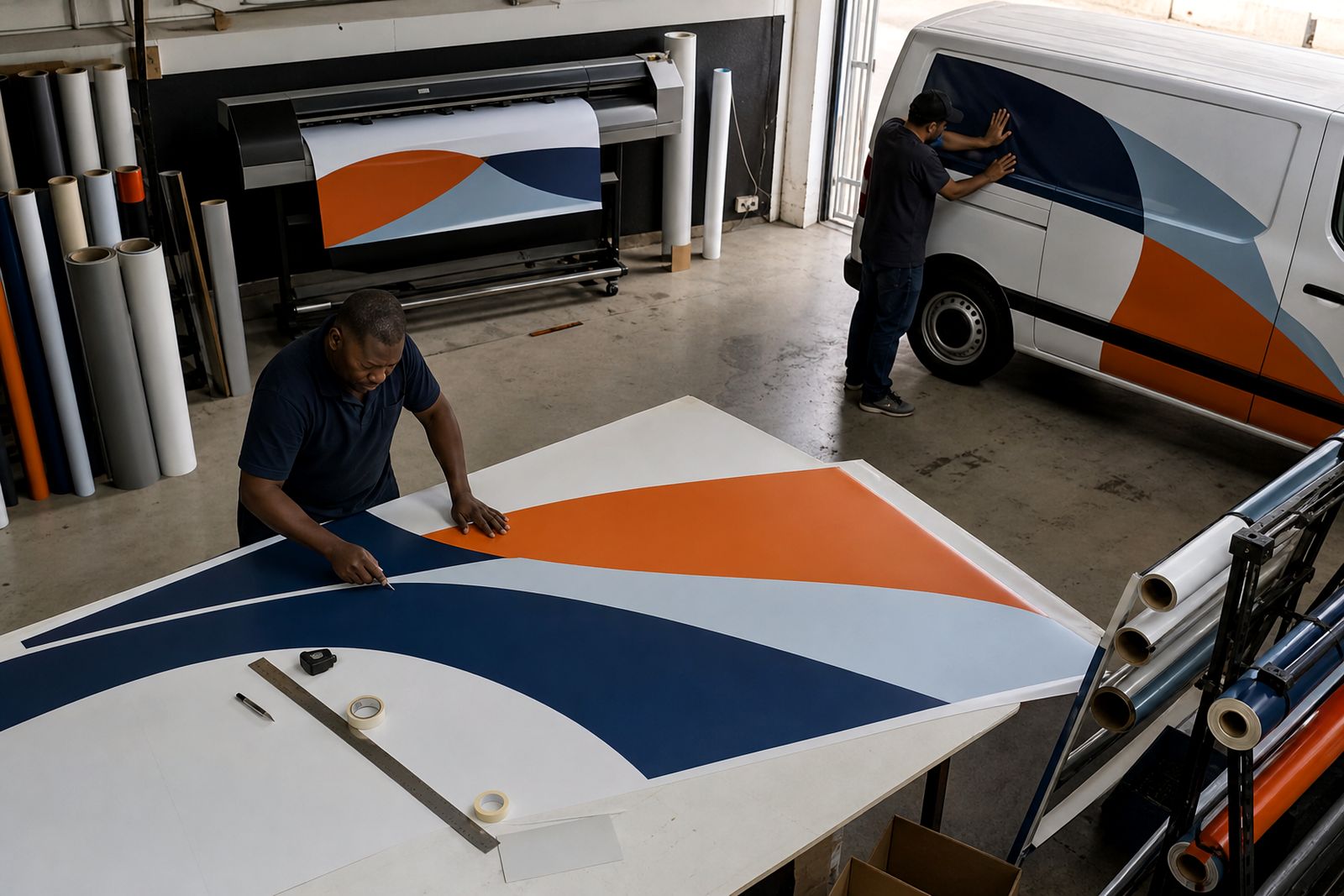
Carry-over details from first run
Buyers rely on the first production run as the reference point for later spare orders, so refill items follow the same naming, scale and materials as the originals.
Replacement decals, panels and loose vinyl all need a precise spec for position, size and material so the new part lines up with what already sits on the shopfront. Material notes should confirm whether the original used gloss vinyl, matt vinyl, cut lettering, printed sticker film or a rigid branded panel, because colour density and edge finish must stay aligned.
Graphic sizing written into the spec gives context that a file name alone cannot provide, describing how each element lines up with frames, glazing bars, clip strips or fascia joins on the shopfront. It also records whether the spare must follow an original trim path or match a later fitment change from the previous order.
Details buyers should receive
The spec sheet sets out the part code, quantity, finished size and fixing method for each replacement item, together with the client store or rollout reference originally used.
Colour call-up, laminate choice and pack count all sit together with the correct artwork version on the spec so the refill order follows the same standard as the first run. Short comments on any visible damage or missing sections on the installed graphics help confirm that the replacement set covers every gap.
Spare specifications for replacement graphics record the following details:
- Part codes linking spare pieces to the existing graphics set design
- Recorded sizes showing how large the graphics appear once fitted
Surface and usage factors for spare items
Replacement branding has to go onto surfaces that have aged since the first fitment. Older adhesive lines, faded panels, faded window bands and repainted fascias can all be listed so the spare is cut or finished with those changes in mind.
Refill items end up on glass or panels that already carry security film, old adhesive, strike tape or screw holes from earlier signage, so spare specs may call for adjusted bleed, overlaminate or revised fixing points. Install notes can also state how old film, adhesive or hardware will be removed or bridged so the new graphic sits cleanly on the glass or panel.
Paperwork that supports future refills
Top-up orders for decals, brand marks and infill pieces rely on a shared spec so the store can complete an existing graphics set without waiting for a full refit.
Filed spec sheets for spares kept together with the purchase order, artwork proof and material record for each store make it easier to identify the exact decal or panel that needs repeating. That history ties the refill back to the first production run so the refreshed piece lines up with the remaining graphics in scale, colour and material.
What our Signage and Graphics customers say
Verified Google reviews
Also worth a look
Tell us about your shopfront, vehicle or graphics job
Share the site or vehicle, rough sizes and your date, and we will come back with practical options and a quote.
Start an enquiry