Sticker run specifications
A sticker run is defined by the artwork setup, finished size, surface finish, adhesive type, and how the total quantity splits across versions or customer branches.
Artwork setup for sticker runs
Sticker jobs tie together more cleanly when the named job, intended size, finish, adhesive and quantity breakdown sit in one brief. Having these points alongside the visual layout makes it easier to interpret naming conventions and version changes on the print file.
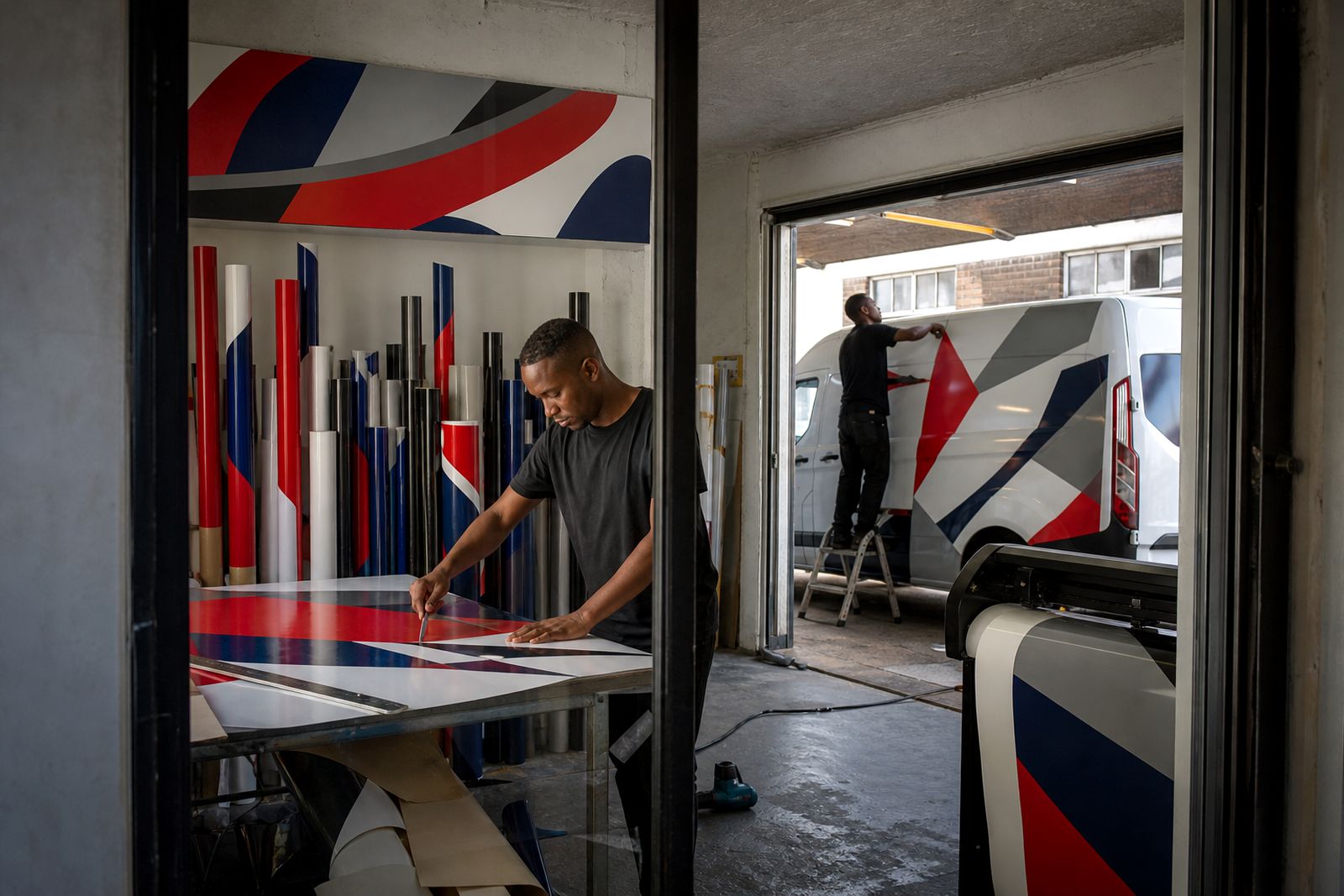
Print files for stickers are easier to process when they arrive at their final print size, with cutting paths parked on a separate layer and every font already converted to outlines. Details about how the piece will sit in use (such as face-to-face mounting on glass, spanning box flaps, or wrapping around curved bottles) guide choices between kiss-cut sheets and individual through-cut pieces. Projects that will be handled often, wiped down, or left in direct sun should spell out whether they need UV lamination, writable label stock, or a removable adhesive option so the construction suits that wear.
Any barcode, serial number, or batch reference that must remain scannable after lamination needs to appear clearly in the artwork. Consistent placement keeps codes readable across promo labels, window decals, and till-point stickers in one run.
Checks that prevent print waste
Bleed, safe area, and colour build directly influence how trims fall and how solid areas appear on stacked sheets or rolls. Small text also needs checking for legibility, particularly where white ink, clear media, or reverse application come into play. Using one agreed size set across versions keeps packing lists and carton labels distinct even when the artwork looks similar.
Names for brands and areas on stickers stay easier to read when they echo the wording already used on your other branding, so labels match what customers see on your counters, windows, and packaging. Final dimensions, chosen material, and a quick visual description of the application area appear as short notes in the project enquiry. Orders carrying several sticker types stay orderly when each version shows its own quantity and finish line in the spec.
Sticker details worth capturing in the spec include:
- Final size and cut shape
- Adhesive type named (permanent, removable, or tamper-evident)
- Separate quantities recorded for each artwork version or store
Sticker materials and adhesives
Materials chosen for stickers on these runs split into paper-based label stock and tougher filmic vinyl, with each route offering a different appearance and durability level. Permanent vinyl suits long-term shopfront, machinery, and product identification, while removable adhesives line up better with short-lived promotions or temporary notices. Jobs destined for fridges, hot equipment, or items washed with strong detergents should describe that use clearly in the spec so the label construction can be selected to handle those conditions.
Fine dust from packing zones, overspray from recent painting, or silicone polish left on your display counters can all weaken the bond, even when the print looks perfect. Couriered batches are easier to distribute when pack counts per customer branch or store and bundle sizes per installer are written into the spec, so fitting teams can grab the correct stack without tearing open every sheet at your sales counters.
Briefing notes for sticker work
Uses include product labelling, window promos, shelf strips, box seals, and branded handout stickers. Size, quantity, finish, adhesive type, and whether the artwork prints in CMYK only or also uses white ink appear together as a short, clear list in the brief. Noting earlier issues such as edge lift, fading, or glue residue gives context for choosing materials and layouts on the new sticker run.
What our Signage and Graphics customers say
Verified Google reviews
Also worth a look
Tell us about your shopfront, vehicle or graphics job
Share the site or vehicle, rough sizes and your date, and we will come back with practical options and a quote.
Start an enquiry